




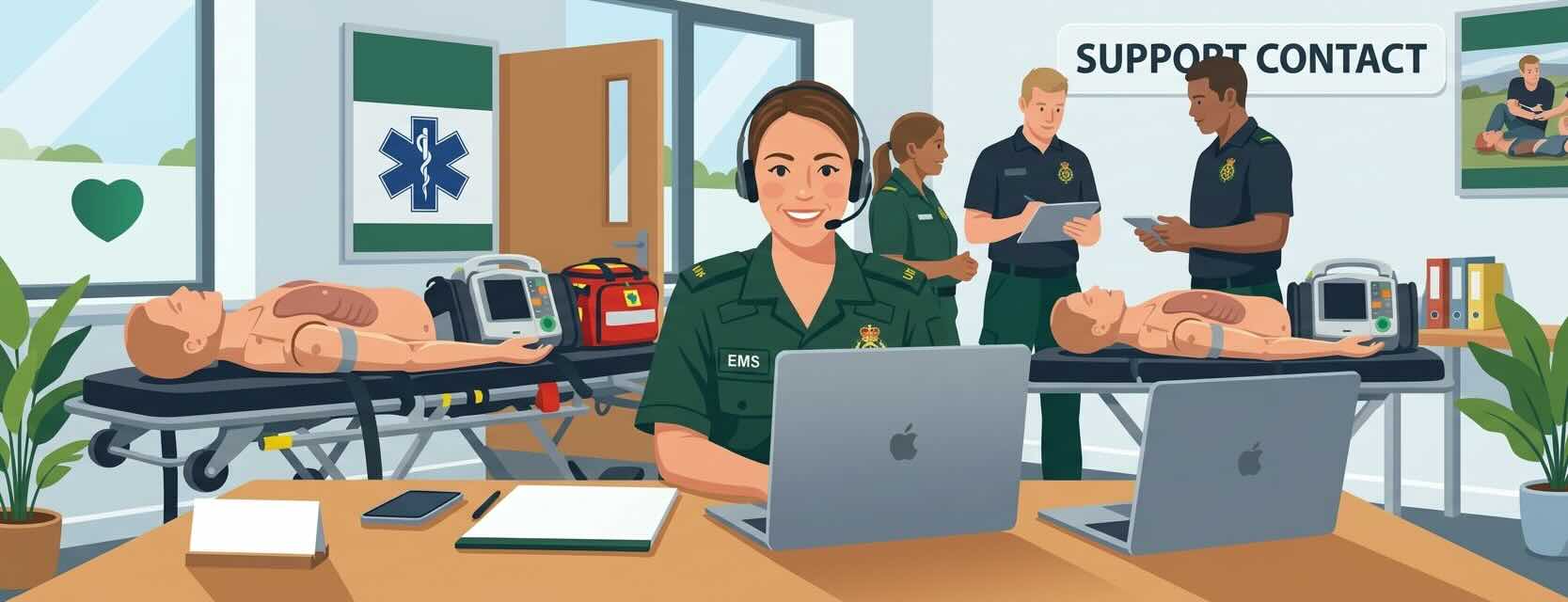
Several ambulance services are testing AI tools that turn conversations into draft clinical notes. Early findings are encouraging, but accuracy, patient privacy and professional accountability still need careful attention.
Why this matters
Clinical documentation is part of patient care. It explains what we found, what we did, why we made particular decisions and what should happen next.
It also takes time.
During an ambulance assessment, we are trying to listen, observe, examine, reassure and make decisions. Somewhere within that, we need to produce a clear and accurate record that another professional can understand.
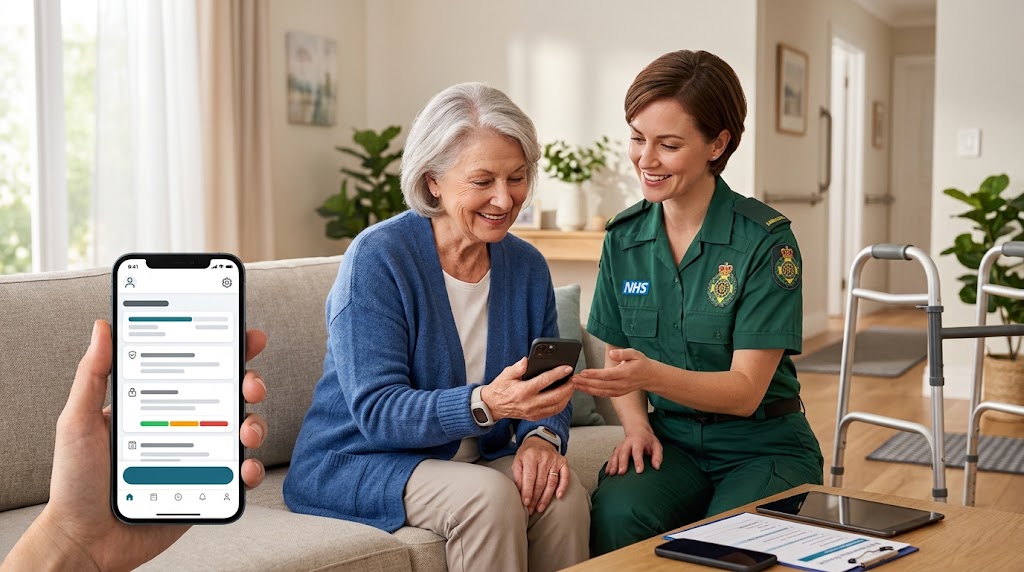
Several UK ambulance services are exploring whether artificial intelligence can help with that workload. These tools, often called ambient voice technology or AI scribes, capture a conversation and produce draft documentation for the clinician to review.
I have not used one of these systems in clinical practice. I cannot offer a personal verdict on how well they work. However, I can see why ambulance services are interested, and why colleagues might welcome some help with documentation.
I would also want a few questions answered before putting my name to the finished record.
What does AI note-taking actually do?
An ambient scribe captures spoken conversations and uses AI to produce a transcript, summary or structured clinical note.
Unlike conventional dictation, the clinician does not necessarily have to dictate a finished account. The system can work from the consultation itself.
London Ambulance Service describes technology that turns conversations between clinicians and patients into structured medical notes. Those notes must then be checked and approved by the paramedic. South East Coast Ambulance Service describes a similar process in its emergency operations centres.
That final check matters. The output is a draft, and the clinician remains responsible for ensuring it accurately represents the assessment and care provided.
Which ambulance services are involved?
Public information confirms activity across several English ambulance services, although they are at different stages.
| Service | What has been publicly confirmed |
|---|---|
| London Ambulance Service | TORTUS tested in telephone assessments and face-to-face patient care. |
| South East Coast Ambulance Service | TORTUS pilot in emergency operations centres, initially scheduled to run until February 2026. Later board papers considered an extension. |
| South Western Ambulance Service | Its privacy notice names TORTUS and describes the assessment and adoption of ambient voice technology. |
| North East Ambulance Service | An eight-week pilot involving staff across different roles, supporting documentation from conversations and meetings. |
| North West Ambulance Service | A trial involving an AI scribe built into clinicians’ iPads. |
| Yorkshire Ambulance Service | An October 2026 data protection assessment register entry describes Accurx Scribe, powered by Tandem, with clinician review before transfer into CAD. |
These sources establish trials, planned use or assurance work. They do not establish that every service has completed an evaluation or introduced the technology across its entire operation.
What have the early results shown?
London provides some of the clearest ambulance-specific findings.
A research preprint published in December 2025 evaluated the technology in telephone assessments and on-scene care.
For 656 telephone assessments using ambient voice technology, the researchers reported assessment duration falling from 17 to 15 minutes. Throughput increased from 2.0 to 2.3 patients per hour, a reported 15% increase.
Across 344 face-to-face contacts, mean on-scene time fell from 44 to 41 minutes.
Those findings deserve attention. A modest improvement repeated across many consultations could be useful.
However, this was a before-and-after evaluation in one ambulance trust. The version reviewed was a preprint, rather than a completed peer-reviewed trial. It supports further investigation, but it does not tell us what every service should expect.
There is also a difference between reducing the time taken to complete an assessment and improving the outcome for the patient. Both matter, but one should not be presented as proof of the other.
My view: the appeal is being able to listen
The part that interests me most is the possibility of giving the patient more attention.
Someone explaining their symptoms may be frightened, embarrassed, confused or struggling to find the right words. A relative may be trying to fill in the gaps. There can be a lot to take in.
If a documentation tool allows a clinician to listen more closely without losing important information, I can see a practical benefit.
But I would want to know what happens to the time saved. Does it mean better engagement with the patient? Less unfinished documentation? A more manageable workload?
I would be disappointed if success were judged only by how many additional patients could be fitted into a shift. Staff experience and the quality of the consultation deserve to be measured too.
A polished note can still be wrong
Accuracy would be my main concern.
A record does not become reliable because it reads well. A missing negative, an incorrect medication or a possibility written as a confirmed finding could change how the next clinician understands the patient.
My concern would be that a convincing draft might become easy to trust, especially during a demanding shift.
That is a concern about how the technology could be used, rather than something I can claim to have experienced myself.
The MHRA’s July 2026 guidance makes the professional responsibility clear: clinicians must review and verify AI-generated transcripts, summaries and other outputs before they are used in patient care.
I would want to know how much correction is needed in ordinary ambulance work. A useful draft that needs a few changes could save time. A draft that regularly needs substantial rewriting might offer much less benefit.
Ambulance work needs its own evaluation
Telephone consultations and face-to-face ambulance assessments present different challenges.
Before drawing a firm conclusion, I would want evidence about how these systems perform with background noise, interrupted conversations, interpreters, distressed patients and several people speaking.
I would also want to know how they distinguish between what the patient reports, what a relative says and what the clinician actually finds.
These are practical questions for evaluation. They should not be treated as proven failures of the systems being trialled.
There is still uncertainty across healthcare more widely. An independent NIHR-funded evaluation reports that evidence is most consistent for reductions in documentation time. Evidence about safety, patient experience and costs remains limited, while findings on note quality are mixed. Further results are expected in February 2027.
Patients need to understand what is happening
Patients should know when technology is being used to capture their conversation.
NHS England’s guidance says they should be informed at the beginning of the consultation, and their choice to object should be respected.
For me, that explanation needs to be straightforward. What is listening? Why is it being used? What happens to the information?
Data handling should also be checked for each product and local arrangement. A statement about one trial should not become a blanket claim that every AI scribe handles recordings and transcripts in the same way.
Is Welsh Ambulance using it?
The public sources reviewed did not confirm a live Welsh Ambulance patient-facing ambient note-taking trial.
There is a relevant procurement development. An August 2026 Digital Health and Care Wales notice describes a proposed ambient voice technology framework and lists Welsh Ambulance among the organisations eligible to use it.
That establishes a potential purchasing route. It does not confirm that Welsh Ambulance has bought a product or started using it with patients.
What should crews take from this?
Ambient voice technology is worth following, but the practical questions remain familiar: is the record accurate, is the patient informed, and does the system help the clinician provide good care?
The Health Services Safety Investigations Body launched an investigation into ambient voice technology in hospitals in August 2026. Its scope is adult hospital care, rather than these ambulance trials, but it highlights the need to understand safety risks alongside efficiency benefits.
My position is cautiously interested. I would welcome help with documentation if it allowed me to concentrate more fully on the person in front of me.
Before relying on it, I would want proper training, clear arrangements for patient information and enough time to check the record thoroughly.
The early findings justify further testing. The real test is whether the technology produces a reliable, useful record during everyday ambulance work and gives clinicians more room to care.
References
- Digital Health and Care Wales (2026) Ambient Voice Technology (“AVT”) Solutions. Available at: Sell2Wales procurement notice (Accessed: 14 October 2026).
- Davis, D. et al. (2025) ‘“What witchcraft is this?”: Paramedics report gains in productivity, well-being, and patient flow from piloting ambient voice technology in an NHS Ambulance Service’, medRxiv [Preprint]. doi: 10.64898/2025.11.27.25340564.
- Health Services Safety Investigations Body (2026) The use of Ambient Voice Technology in hospitals. Available at: HSSIB investigation (Accessed: 14 October 2026).
- London Ambulance Service NHS Trust (2025) First AI trial sees paramedics at London Ambulance Service treat more patients. Available at: London Ambulance Service announcement (Accessed: 14 October 2026).
- Medicines and Healthcare products Regulatory Agency (2026) Ambient voice technology-enabled products. Available at: MHRA guidance (Accessed: 14 October 2026).
- NHS England (2026) Using AI-enabled ambient scribing products in health and care settings. Available at: NHS information governance guidance (Accessed: 14 October 2026).
- North East Ambulance Service (2026) NEAS teams trial new digital technology to support documentation. Available at: NEAS trial announcement (Accessed: 14 October 2026).
- North West Ambulance Service (n.d.) Ambient voice technology trial. Available at: NWAS trial information (Accessed: 14 October 2026).
- Nuffield Trust (n.d.) Evaluation of ambient voice technology in the NHS. Available at: Independent evaluation programme (Accessed: 14 October 2026).
- South East Coast Ambulance Service NHS Foundation Trust (2025) AI pilot aims to improve efficiency and patient care. Available at: SECAmb pilot announcement (Accessed: 14 October 2026).
- South Western Ambulance Service NHS Foundation Trust (n.d.) Privacy notice. Available at: SWASFT privacy notice (Accessed: 14 October 2026).
- Yorkshire Ambulance Service NHS Trust (2026) Data protection impact assessments. Available at: YAS assessment register (Accessed: 14 October 2026).
Quick Overview
- 7 minute read
- Intermediate level
- Updated 14 Oct 2026
Key Learning Points
- Several ambulance services have confirmed trials or work involving ambient AI documentation.
- London’s early evaluation reported shorter assessments and reduced mean on-scene time, but its findings have limitations.
- AI-generated documentation requires clinician review and correction.
- Patients should be informed when an ambient scribe is being used and have their objection respected.
- Time savings should be considered alongside record quality, staff experience, patient safety and implementation costs.
CPD Example for Logging
What? So What? Now What? — an example to adapt to your own learning and practice.
What?
I reviewed the emerging use of ambient voice technology in UK ambulance services. I learned how these systems produce draft clinical documentation and considered the early findings from London Ambulance Service alongside the limitations of the evidence.
So What?
The technology may reduce documentation workload, but the clinician remains responsible for the accuracy of the record. A well-written draft still needs careful checking. Patient understanding, privacy and the amount of editing required are important considerations.
Now What?
I will follow further ambulance-specific evaluations and check my organisation’s approved arrangements before considering use. If a system is introduced locally, I will complete the required training and review its output carefully, particularly medication details, negative findings, attribution and clinical uncertainty.
Potential impact on practice: Better understanding of how to assess AI documentation tools without assuming that automated output is accurate.
Time: Suggested 30 minutes for reading, reviewing a linked source and completing a personal reflection. Record the time you actually spend.
Use this as a starting point. Record your own reflection and actual learning time in your CPD portfolio.
Finished this article?
Mark it as read to record your progress and collect learning points.
Self-reported reading. This does not complete a CPD reflection.