Mental health Hub
jobs are no longer the exception in ambulance work. They are part of the daily workload, often complex, often uncertain, and sometimes carrying more risk than the jobs that look dramatic on the surface.
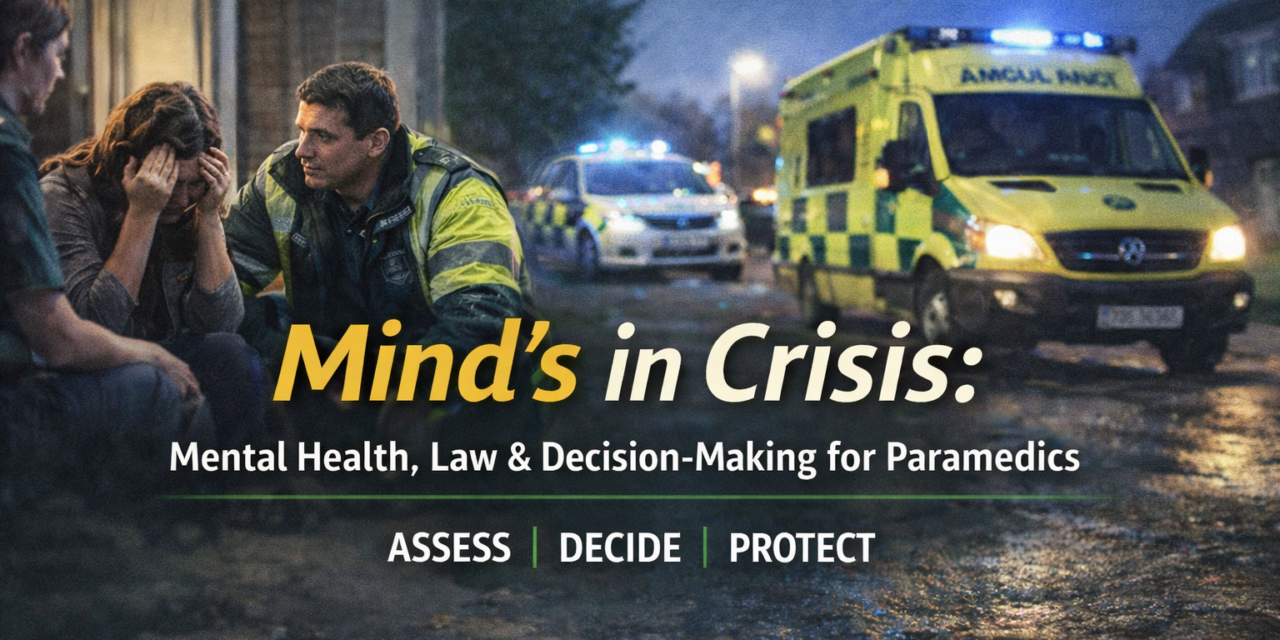
This series is built for the reality of frontline practice in the UK. It is written for paramedics, EMTs, and prehospital clinicians who are turning up to people in distress, in their homes, on the street, or in the back of an ambulance at two in the morning, trying to make the right decision with limited information and no easy answers.
Much of the public conversation around mental health focuses on awareness and support. That matters. But in prehospital care, the challenge is different. You are not there to provide long-term therapy. You are there to assess, to manage risk, to understand the law, and to decide what happens next in a way that keeps the patient safe and protects your practice.
This is where things often go wrong.
Mental health calls are sometimes treated as less clinical. In reality, they demand a high level of clinical judgement, communication skills, and legal understanding. Decisions around capacity, consent, risk, and non-conveyance are not optional extras. They sit at the centre of safe practice and are judged closely if something goes wrong.
This series takes those pressure points and breaks them down into clear, usable guidance. It draws on real-world ambulance experience and aligns with recognised UK frameworks such as NICE guidance, JRCALC, and key legislation, including the Mental Capacity Act 2005 and the Mental Health Act 1983.
Across the series, you will work through:
- What mental health jobs really look like on scene
- How to assess capacity and defend your decision
- What actually matters when assessing suicide risk
- When non-conveyance is safe and when it is not
- How police powers and ambulance roles fit together
- What to document to protect both the patient and yourself
The aim is simple. To help you make better decisions, explain them clearly, and stand by them with confidence.
Because in the end, mental health work in prehospital care comes down to one question:
Is this patient safe right now, and can I justify my decision?
Chapter 1: When We Turn Up: What Mental Health Jobs Really Are in Prehospital Care
Chapter 2: Capacity the Decision That Protects You or Exposes You
Chapter 3: Suicide Risk: What Actually Matters on Scene