
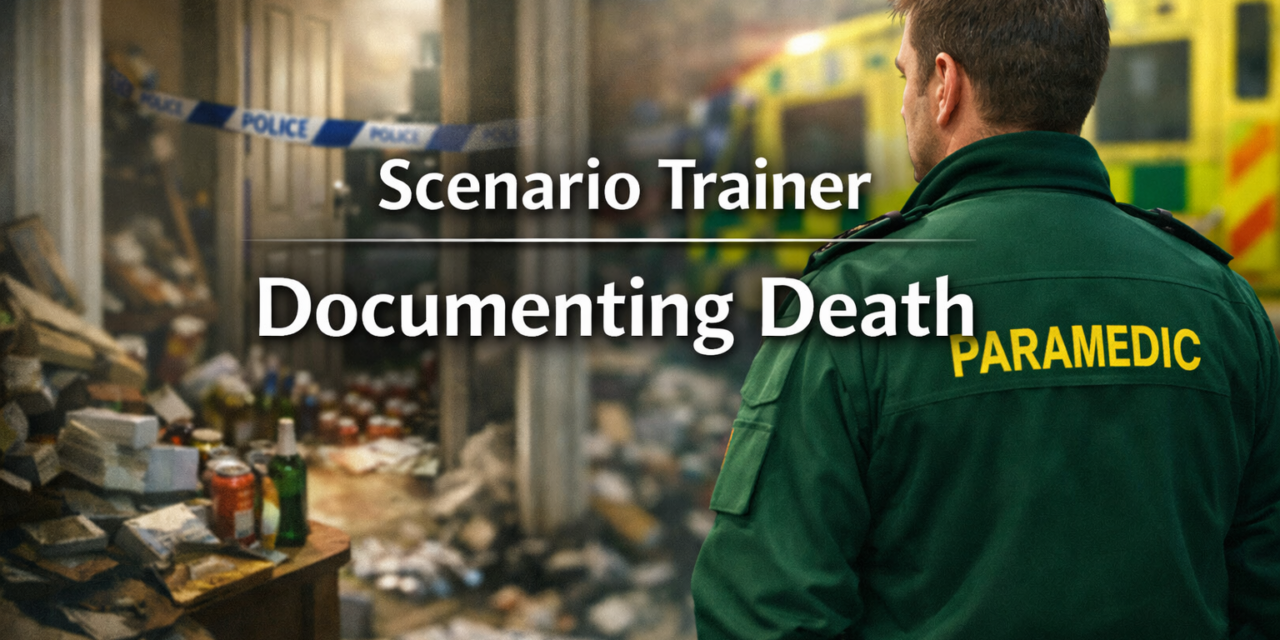
Unexpected Death and Coroner Documentation Scenario
This interactive scenario is designed for UK pre-hospital clinicians. It focuses on scene assessment, recognition of a death that will likely require coroner referral, and strong, factual, defensible documentation.
Learning aims
- Identify why an unexpected death at home is likely to need coroner referral.
- Separate observation from speculation.
- Document scene layout, patient position, no-signs-of-life findings, witness information, and safeguarding concerns clearly.
- Explain why poor documentation weakens coroner understanding and professional defensibility.
Quick legal and professional anchor points
- Unexpected death in the community.
- Cause of death unknown at scene.
- Possible gastrointestinal bleeding with no confirmed diagnosis.
- Possible self-neglect and environmental concerns.
- Need for independent review of the circumstances.
- Who the patient is and who was present.
- Exact scene layout and environment.
- Clinical findings used to recognise life extinct or justify no resuscitation.
- Last known well or witness account if available.
- Why the death appears unexpected and why you cannot certify cause of death.
- Who was informed and what happened next.
Scenario
Dispatch information
You are dispatched to a private residential address for a 60-year-old male reported to be unresponsive.
On arrival, you are met by the patient's father, who takes you inside and directs you upstairs.
Reference principles built into this exercise
Acute upper gastrointestinal bleeding guidance matters here because dark or black tarry blood-like material may raise concern for a significant bleed, but scene findings alone do not prove diagnosis. The pre-hospital lesson is to recognise that serious pathology may sit behind alcohol-heavy environments and collapse.
Document objective no-signs-of-life findings, scene context, witness account, last known well if available, any DNACPR or advance decisions if present, whether CPR was started or withheld and why, who was informed, body position, whether the body was moved, and any safeguarding or suspicious features.
Clear, factual, timed, traceable notes. Show what you saw, what you did, who you spoke to, what they said, and why your decision-making was reasonable. If it is not written down, it is hard to defend later.