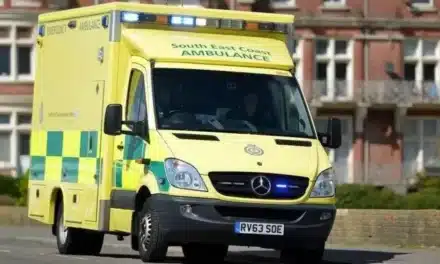

For paramedics and EMTs working in the United Kingdom, clinical decision making in the prehospital environment must be fast, structured, and defensible. The unpredictable nature of emergency care means clinicians often work with limited information, variable environments, and significant time pressure.
To support safe and consistent care, UK ambulance services rely heavily on the Joint Royal Colleges Ambulance Liaison Committee (JRCALC) Clinical Practice Guidelines. These guidelines form the core clinical reference used by ambulance clinicians across the UK.
Understanding what JRCALC is, how the guidance is produced, and how it should be applied in practice is essential for every prehospital clinician.
What is JRCALC?
The Joint Royal Colleges Ambulance Liaison Committee (JRCALC) produces evidence-based clinical guidelines used by UK ambulance services. These guidelines provide a national framework for the assessment and treatment of patients in the prehospital setting.
JRCALC guidance is primarily designed for:
-
Paramedics
-
Emergency Medical Technicians (EMTs)
-
Specialist paramedics
-
Critical care paramedics
-
Ambulance clinicians working within UK ambulance services
The aim of JRCALC is simple.
To standardise clinical practice across ambulance services and ensure patients receive safe, evidence-based prehospital care.
The guidelines are widely adopted by NHS ambulance services and are incorporated into local clinical policies, electronic patient record systems, and training programmes.
How JRCALC Guidelines Are Produced
JRCALC guidelines are not written by a single organisation or individual. They are produced through collaboration between several major healthcare bodies and clinical experts.
The process involves:
-
Reviewing national and international evidence
-
Assessing recommendations from other authoritative organisations
-
Consulting subject matter experts
-
Adapting guidance specifically for prehospital care
Key evidence sources used include:
-
NICE clinical guidelines
-
Resuscitation Council UK recommendations
-
Royal College guidance
-
Academic literature
-
Prehospital research
-
International emergency medicine resources such as Life in the Fast Lane
Expert clinicians from across emergency medicine, critical care, prehospital medicine, and ambulance services contribute to the review and development process.
The goal is to ensure the final guidance is both clinically accurate and operationally realistic for use in the field.
How Paramedics Use JRCALC in Practice
JRCALC guidelines provide structured support for clinical decision-making but are not intended to replace clinical judgement.
In practice, paramedics use the guidelines to:
-
Guide patient assessment
-
Support treatment decisions
-
Ensure medications are used safely
-
Standardise care across services
-
Provide clinical justification for interventions
In many services, the guidelines are accessible through:
-
Mobile apps
-
Electronic patient record systems
-
Printed pocket guides
-
Clinical reference platforms
Paramedics often consult JRCALC during complex cases or when managing less frequently encountered conditions.
However, clinicians are also expected to understand the principles behind the guidance, not simply follow algorithms blindly.
Major Clinical Areas Covered in JRCALC
JRCALC guidelines cover a wide range of clinical presentations encountered in prehospital care. Some of the most important areas include airway management, cardiac arrest, trauma, stroke, sepsis, and medication administration.
Airway Management
Airway management is a fundamental skill in prehospital medicine.
JRCALC guidance emphasises a structured airway assessment and prioritises simple interventions first before progressing to more advanced techniques.
Typical airway management strategies include:
-
Airway positioning
-
Suction
-
Oropharyngeal airway insertion
-
Nasopharyngeal airway insertion
-
Oxygen therapy
-
Bag valve mask ventilation
-
Advanced airway techniques were indicated
Paramedics must continuously reassess airway patency and breathing effectiveness throughout patient care.
For example, an unconscious patient with reduced airway tone may require:
-
Head tilt chin lift
-
Oropharyngeal airway
-
High flow oxygen
-
Assisted ventilation if respiratory effort is inadequate
Airway interventions must always be balanced with the need to rapidly transport critically ill patients.
Cardiac Arrest
Cardiac arrest management in the UK follows guidance from the Resuscitation Council UK, which is incorporated directly into JRCALC guidelines.
Key principles include:
-
Early recognition of cardiac arrest
-
Immediate high-quality CPR
-
Early defibrillation
-
Effective airway management
-
Adrenaline administration when indicated
The chain of survival remains central to cardiac arrest management:
-
Early recognition and a call for help
-
Early CPR
-
Early defibrillation
-
Post-resuscitation care
For paramedics, JRCALC provides detailed algorithms covering:
-
Adult cardiac arrest
-
Paediatric cardiac arrest
-
Reversible causes (4 Hs and 4 Ts)
-
When to continue or terminate resuscitation efforts
These guidelines ensure consistent and evidence-based management across ambulance services.
Trauma Management
Trauma care in JRCALC is based on a structured primary survey approach, focusing on the rapid identification and treatment of life-threatening injuries.
The standard trauma assessment follows the C ABCDE approach:
-
Catastrophic haemorrhage
-
Airway
-
Breathing
-
Circulation
-
Disability
-
Exposure
Paramedics must prioritise the treatment of immediately life-threatening conditions such as:
-
Massive haemorrhage
-
Airway obstruction
-
Tension pneumothorax
For example, a trauma patient with severe external bleeding may require:
-
Immediate direct pressure
-
Haemostatic dressings
-
Tourniquet application if appropriate
Early recognition of major trauma also guides decisions about transport to a major trauma centre.
Stroke Recognition and Management
Stroke is a time-critical emergency where early recognition dramatically improves outcomes.
JRCALC guidance recommends the use of validated stroke recognition tools such as FAST:
-
Facial weakness
-
Arm weakness
-
Speech problems
-
Time of symptom onset
If stroke is suspected, paramedics should:
-
Record the exact time the patient was last known well
-
Assess blood glucose
-
Provide oxygen if hypoxic
-
Pre-alert the receiving hospital when appropriate
Rapid transport to a stroke capable centre is critical because treatments such as thrombolysis or thrombectomy are highly time dependent.
Sepsis Recognition
Sepsis is another time-critical condition increasingly emphasised in prehospital care.
JRCALC guidance encourages paramedics to maintain a high index of suspicion when patients present with infection and signs of physiological deterioration.
Indicators may include:
-
Fever or hypothermia
-
Tachycardia
-
Hypotension
-
Altered mental status
-
Increased respiratory rate
Early recognition allows paramedics to:
-
Administer oxygen if required
-
Establish intravenous access
-
Begin fluid resuscitation where indicated
-
Pre-alert hospital teams
Prompt recognition in the prehospital phase can significantly improve patient outcomes.
Medication Use in JRCALC
JRCALC provides detailed guidance on medications that paramedics may administer in the prehospital environment.
These include drugs used for:
-
Pain management
-
Cardiac emergencies
-
Respiratory conditions
-
Allergic reactions
-
Seizures
Each medication section includes:
-
Indications
-
Contraindications
-
Dosage guidance
-
Routes of administration
-
Important cautions
For example, salbutamol is recommended for acute bronchospasm in conditions such as asthma or COPD exacerbations. It is typically administered via nebuliser or inhaler depending on the clinical situation.
Clear medication guidance ensures drugs are administered safely and consistently across ambulance services.
Relationship Between JRCALC, NICE and Resuscitation Council UK
Although JRCALC is the primary operational guideline for ambulance clinicians, it does not exist in isolation.
Three major organisations influence the guidance used in UK prehospital care.
NICE
The National Institute for Health and Care Excellence (NICE) produces national clinical guidelines covering a wide range of healthcare topics.
JRCALC frequently adapts NICE recommendations to ensure they are suitable for prehospital environments, where diagnostic tools and resources may be limited.
Resuscitation Council UK
The Resuscitation Council UK provides national guidance on resuscitation practice, including:
-
CPR algorithms
-
Defibrillation guidance
-
Post-resuscitation care
These recommendations form the foundation for cardiac arrest protocols used in JRCALC.
Educational platforms such as Life in the Fast Lane (LITFL) provide high-quality clinical explanations and learning resources that help clinicians understand the physiology and evidence behind emergency medicine practices.
While LITFL is not a formal guideline body, it is widely used as an educational supplement for clinicians studying emergency care.
Applying JRCALC During Real Incidents
In real-world ambulance practice, paramedics combine JRCALC guidance with clinical judgement.
Consider a patient presenting with acute chest pain.
A paramedic may:
-
Perform a structured assessment using the ABCDE approach
-
Record vital signs and obtain a 12-lead ECG
-
Consider possible causes such as acute coronary syndrome
-
Administer treatments such as aspirin or glyceryl trinitrate when indicated
-
Pre-alert the receiving hospital if a STEMI is suspected
Throughout this process, JRCALC provides the clinical framework that supports these decisions.
Why JRCALC Matters
JRCALC guidelines are essential because they:
-
Provide nationally consistent clinical standards
-
Support safe medication administration
-
Help clinicians justify treatment decisions
-
Align ambulance care with wider NHS clinical practice
-
Promote evidence-based patient care
For paramedics and EMTs, familiarity with JRCALC guidance is not simply an academic requirement. It is a core part of safe and professional clinical practice.
Final Thoughts
The prehospital environment presents unique clinical challenges. Patients may be critically ill, resources may be limited, and decisions often need to be made quickly.
JRCALC guidelines provide a structured and evidence-based framework that supports clinicians in making safe, effective treatment decisions in these complex situations.
However, guidelines are only one part of good clinical practice. The most effective paramedics combine JRCALC guidance with clinical experience, critical thinking, and continuous professional development.
Understanding the reasoning behind the guidance ultimately leads to better decision-making and better patient outcomes.
References
Joint Royal Colleges Ambulance Liaison Committee (JRCALC). Clinical Practice Guidelines.
National Institute for Health and Care Excellence (NICE). Clinical Guidelines.
Resuscitation Council UK. Resuscitation Guidelines.
Life in the Fast Lane (LITFL). Emergency Medicine Education Resources.